


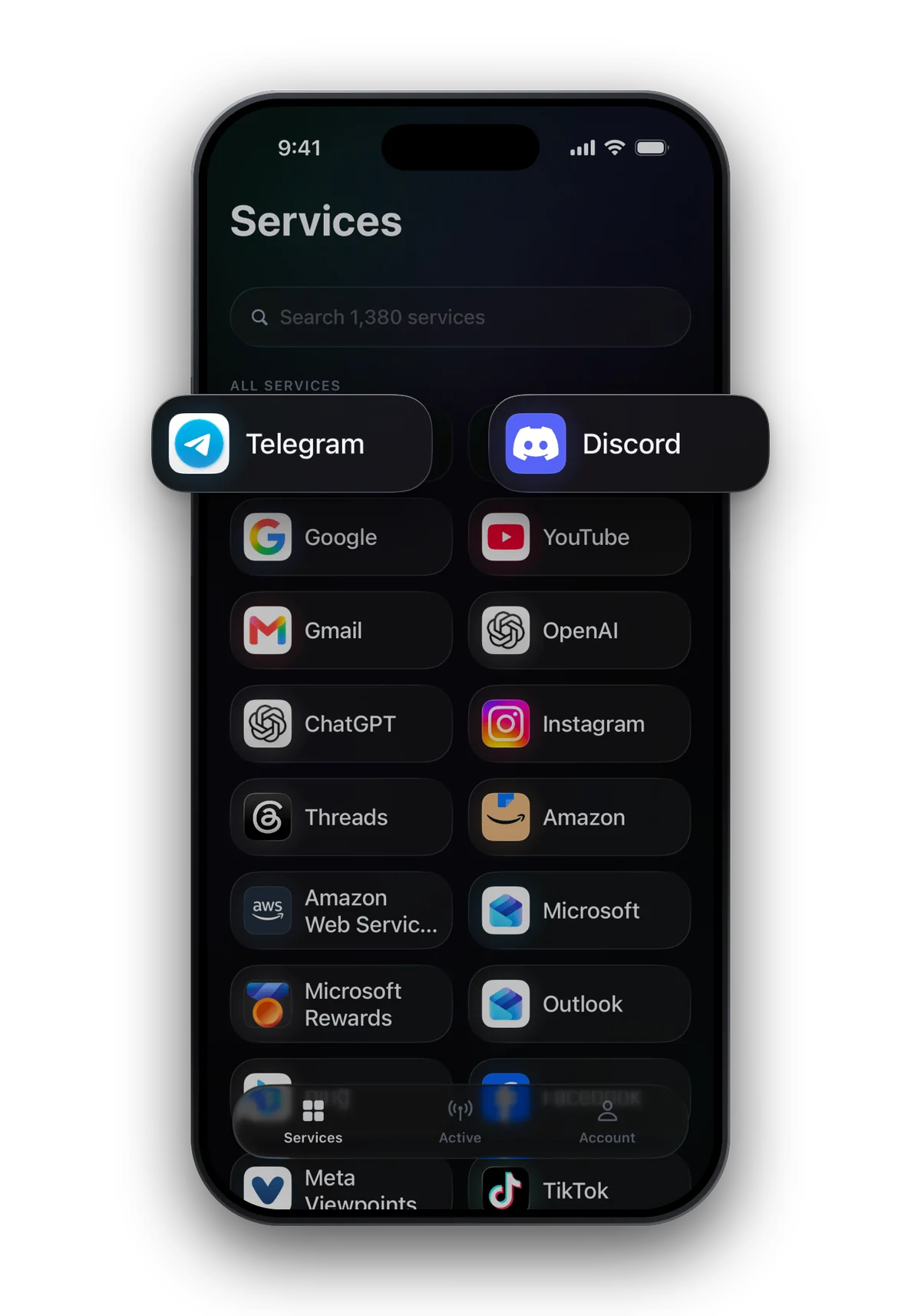
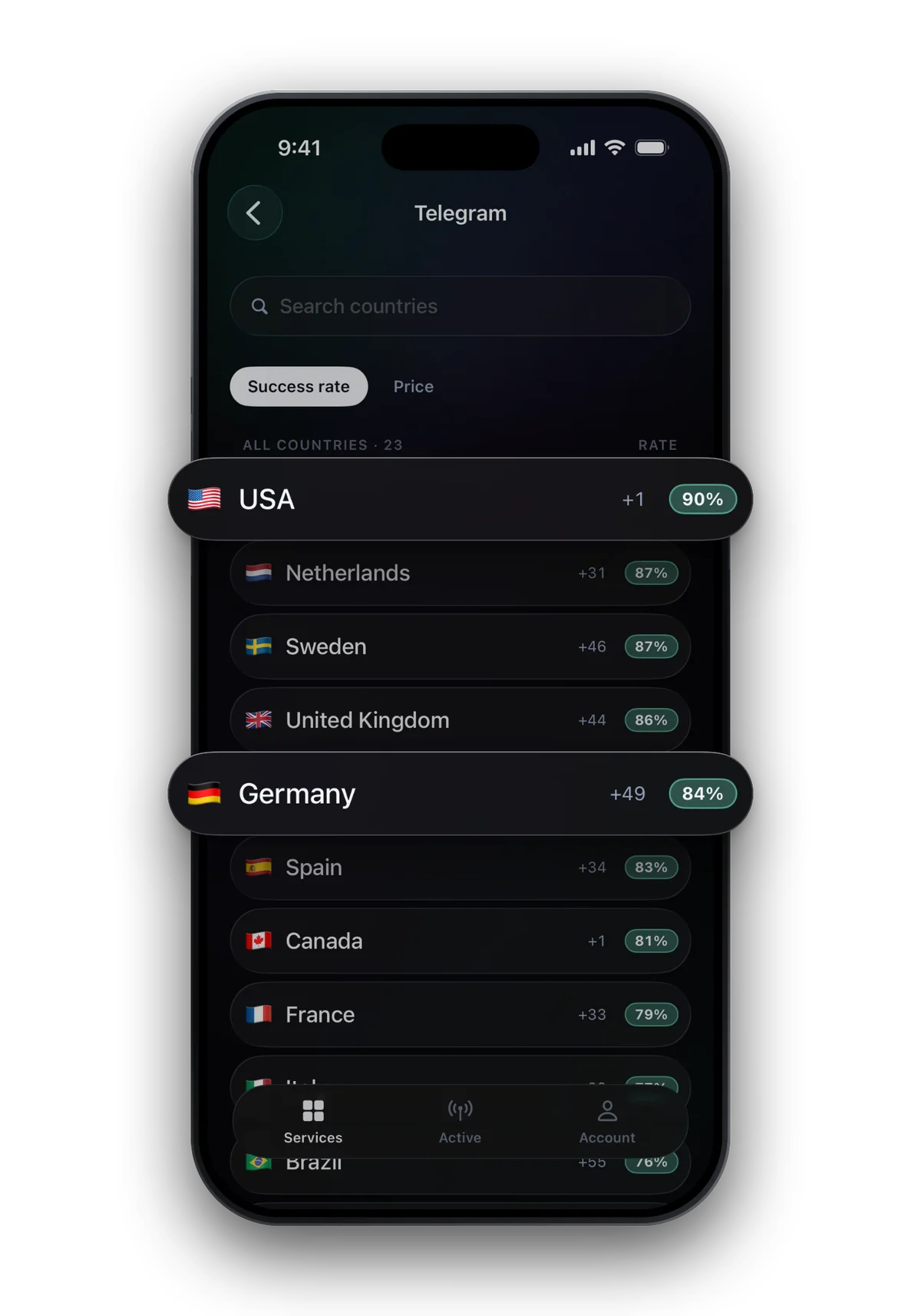
Receiving an SMS online means using a phone number you read in a browser instead of in a phone. You choose the service you are signing up to and the country the number should come from, and the code that service sends shows up on your screen. There is nothing to install and no account to open.
How you get your code
- Open the web app and search for the service that wants a phone number.
- Pick one of the countries the app lists for that service right now.
- Confirm, and the number is on your screen straight away.
- Enter it at the service and ask for the code.
- The SMS appears in the web app on its own. Copy the code across.
What arrives, and what does not
Plain text arrives: the message and the sender. For a verification code that is all you need.
Calls have nowhere to ring, you cannot reply, and pictures never arrive. A service that insists on calling you or on a text back cannot be finished this way.
You do not have to be in that country
A number is reachable from anywhere. What matters is whether the service accepts numbers from that country, not where you are sitting.
How long it takes
Most codes appear within seconds of the service sending them. The number stays yours for 10 minutes, long enough for a slow route. The service lets the code expire quickly, so copy it as soon as it lands.
When nothing arrives
Usually the service refuses that range of numbers, or the number already has an account there. Cancel and try another country rather than asking for three new codes. You do not pay for a number that brought no code.
Common questions
Can I receive SMS online for free?
Public inboxes cost nothing, but anyone can read them and the large services block their numbers. We charge per number instead, and a number that brings no code costs you nothing.
Can I receive a Telegram or WhatsApp code this way?
Yes, both are in the catalogue. WhatsApp checks numbers closely and turns some ranges down. Telegram may show the code in an app where you are already signed in instead of sending an SMS. Each service page lists these quirks.
Which number should I use for a verification code?
For an account you want to keep for years, your own. For a sign-up you need once, or when you would rather not hand out your own number, a number that is yours for one code.
Do I need to install an app?
No. Everything works in the browser.
Can I use the same number again later?
No. Each number is for one code within 10 minutes. For a later code you take a new number.