


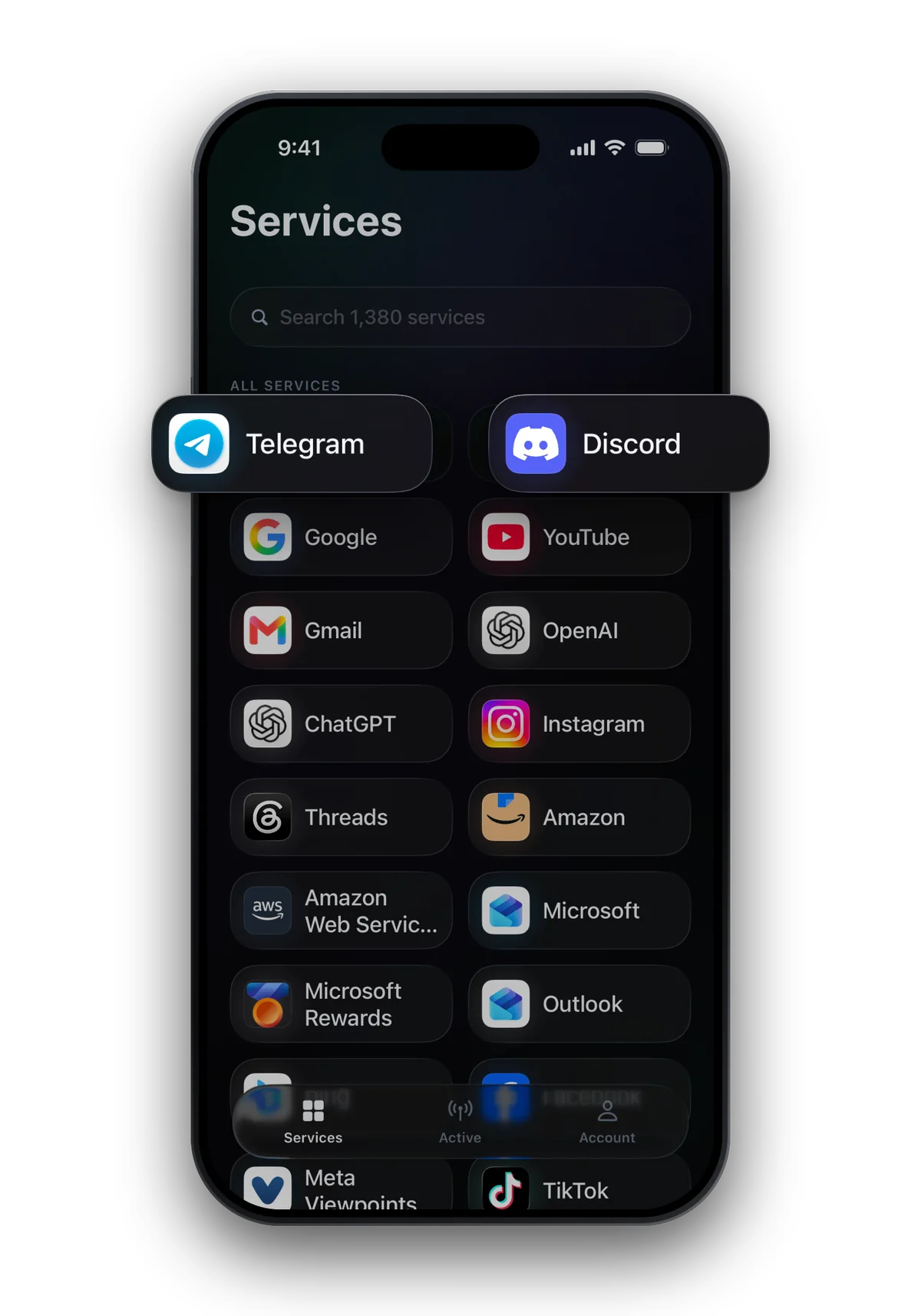
A non-VoIP number is a phone number that runs on a mobile network or a traditional landline, rather than over the internet. Many apps refuse internet-calling (VoIP) numbers at sign-up, because they can be created in bulk at almost no cost. So when a code never comes, the line type is often the reason. A number's label matters less than whether your app actually accepts it.
VoIP, mobile, fixed and non-fixed VoIP
| Runs on | Typical use | Sign-up forms | |
|---|---|---|---|
| Mobile | A SIM or eSIM on a mobile network | Phones | Accepted almost everywhere |
| Landline | A fixed line at an address | Homes and offices | Rarely; usually no SMS |
| Fixed VoIP | Internet, tied to a registered address | Office phone systems, home broadband phones | Often refused |
| Non-fixed VoIP | Internet, usable from anywhere | Calling and second-line apps | Refused most often |
How a service finds out the line type
- Number lookup. Before sending a code, the service queries a database that knows which carrier holds the number and what kind of line it is.
- Range lists. Services keep their own lists of number blocks that produced fake or abusive accounts and stop sending to them.
- History. A number that has verified many accounts recently looks like a shared number, whatever its type.
- Silence. Some services do not show an error at all; they simply never send the text.
None of these checks is perfect. A mobile number can be refused because of its history, and an internet number can occasionally slip through.
How strict popular apps are
| With virtual numbers | Asks again later | |
|---|---|---|
| Often refused | Yes | |
| Often refused | Yes | |
| ChatGPT (OpenAI) | Often refused | No |
| Tinder | Often refused | Yes |
| Discord | Depends on the range | No |
| Usually accepted | No |
From the service facts on each service page. Services tighten or relax checks without notice.


Is every virtual number VoIP?
No. Virtual describes how you use a number, through an app or a website instead of a SIM in your own phone. The line behind it can be a mobile number on a real network or an internet number.
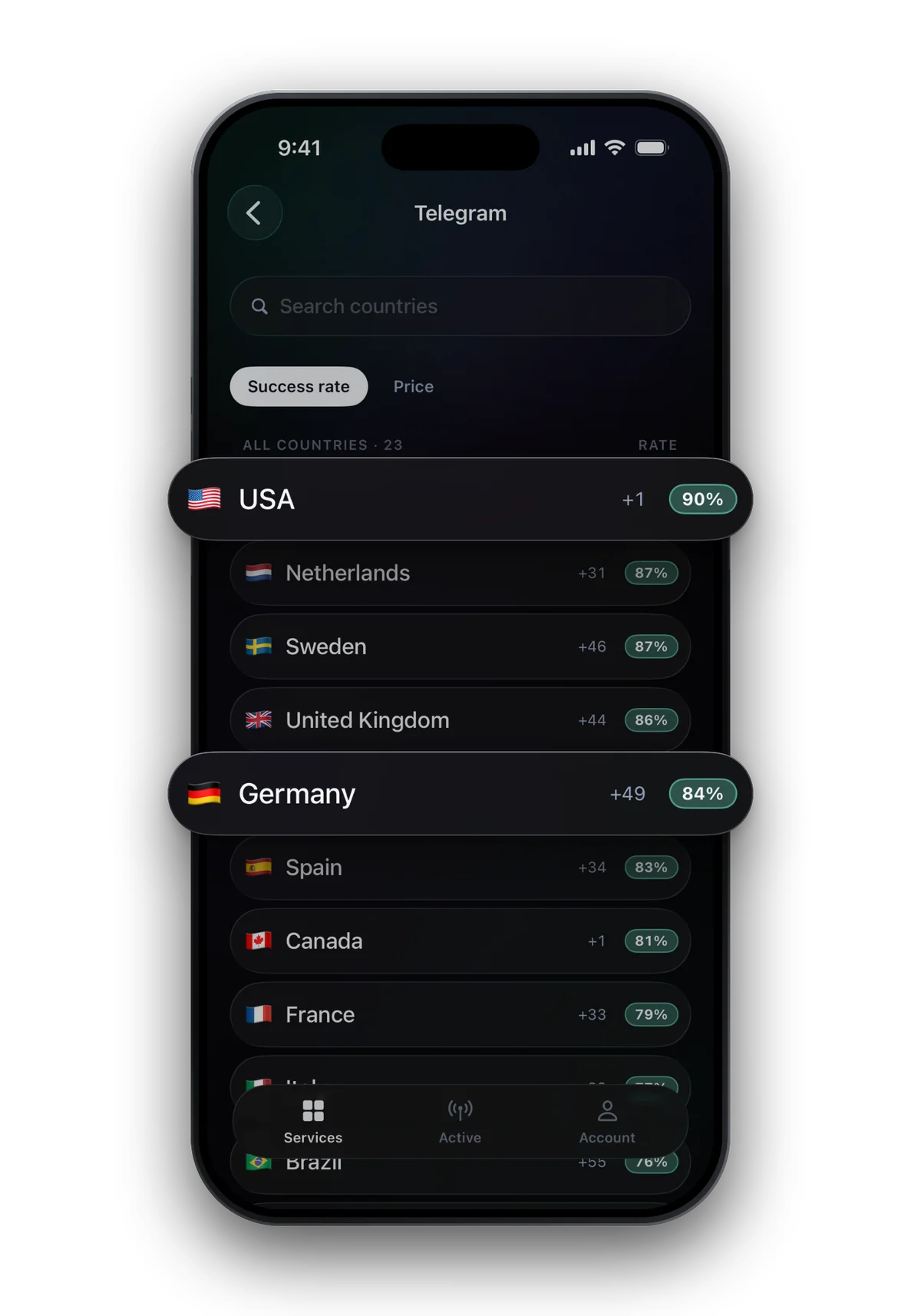
Labels like non-VoIP are hard to verify from the outside. A better signal is what happened with the last numbers from that country for that app, which is what a success rate shows. More on how virtual phone numbers work.
Choosing a number that gets through
- Start from the app, not the country Acceptance differs by app. A country that works for Reddit may fail for WhatsApp.
- Sort by success rate The web app shows it per country before you pay. It never shows 100 %: the display stops at 95 %.
- Give each number two minutes If nothing comes, switch to another number in the same country at no extra charge.
- Change country after two failures Two refusals in a row usually mean the whole range is blocked. See best country for a verification number.
Common questions
What is a non-VoIP number?
A number on a mobile network or a traditional landline, as opposed to one that runs over the internet.
Why do apps not accept VoIP numbers?
Internet numbers can be created cheaply and in bulk, so apps that fight fake accounts refuse them at sign-up.
Can an app tell that my number is virtual?
It can usually tell the line type and whether the number has been used a lot. It cannot see how you access it.
Are SMS For U numbers non-VoIP?
We do not label them, because a label promises nothing. The app shows how often numbers from each country actually received a code for your app.