


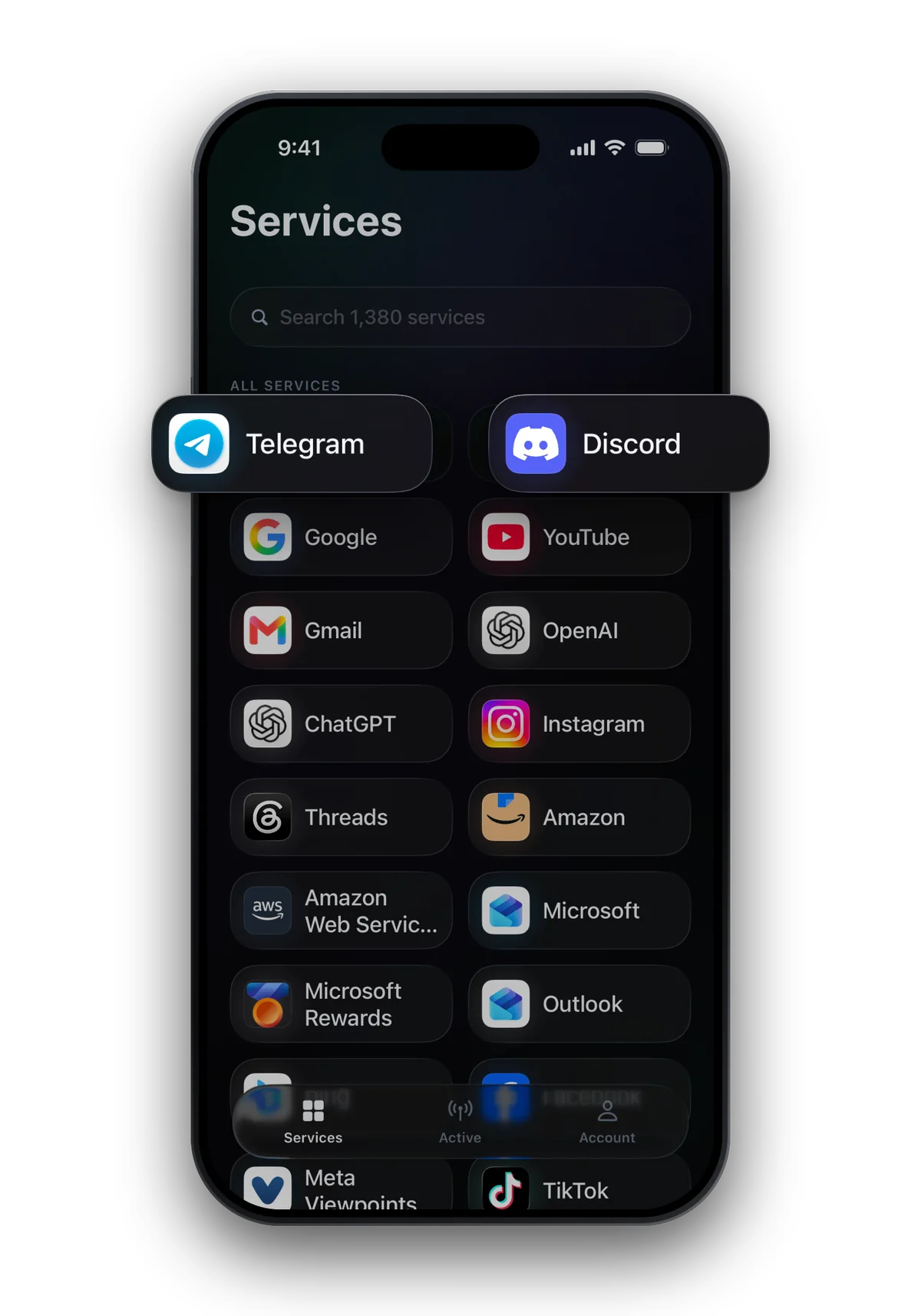
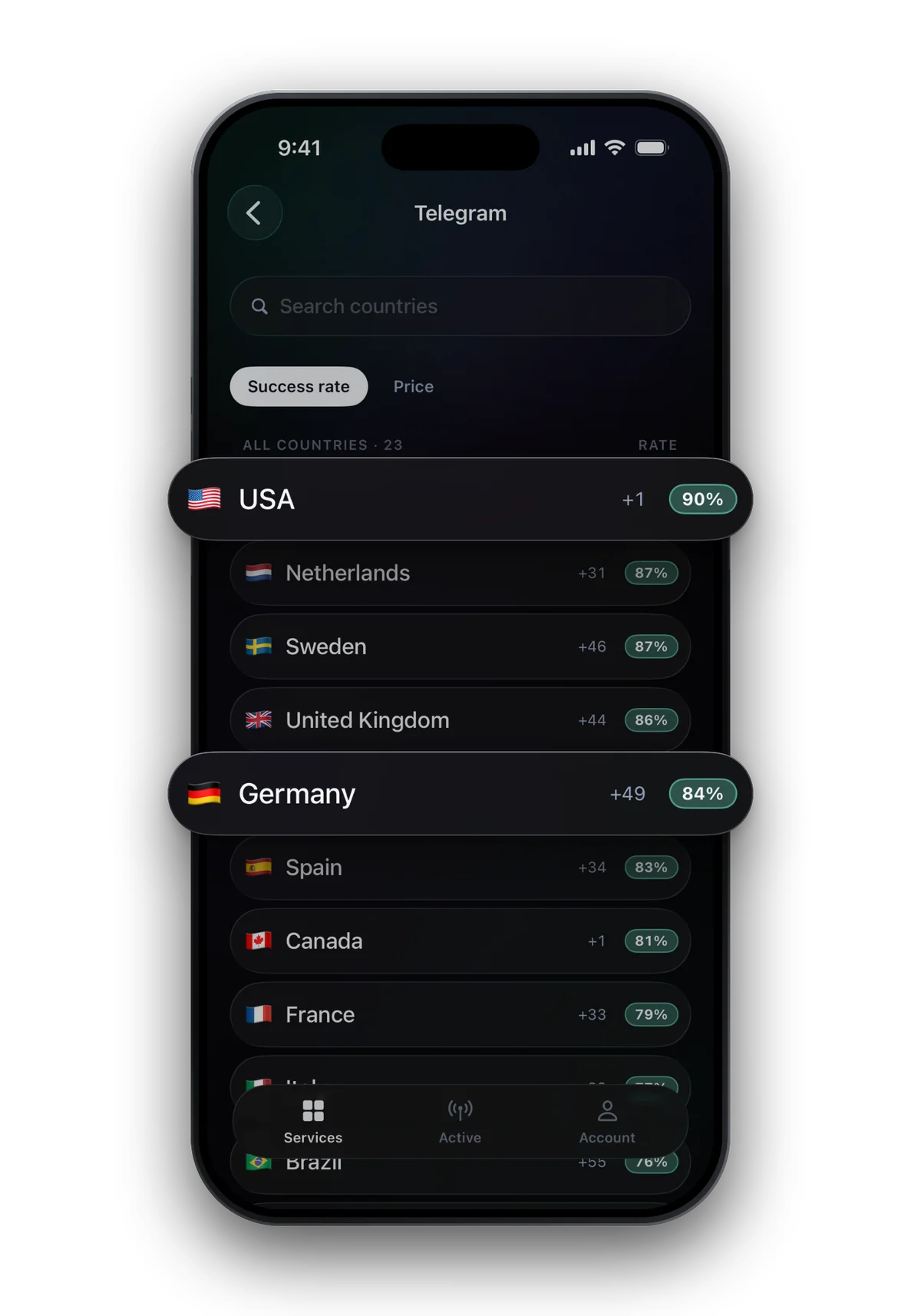
There is no single best country for verification numbers: each service accepts some countries' ranges and turns others away. Choose by the success rate the app shows for your service in each country, then by price. The rate stops at 95 % because no number is certain. If one country fails twice, switch country rather than number.
Why the country matters more than the number
Services rarely judge a single number. They judge ranges: blocks of numbers from one country and one type of line. When a range has been abused, the service refuses all of it, and every number from that block fails the same way.
- Strict services such as WhatsApp and Google refuse many ranges. The country is the decision that counts.
- Mixed services such as Telegram accept some ranges and not others, and that changes over time.
- Tolerant services accept most numbers, so price can lead.
Reading the success rate (and why it stops at 95 %)
- What it shows
- How often numbers for this service from this country brought a code, as reported to us or measured by us
- Good
- From 50 %
- Medium
- From 25 %
- Low
- Below 25 %
- No rate shown
- Nobody has reported or measured one yet
- Highest shown
- 95 %, even when the real figure is higher
The ceiling is deliberate. A service can change its mind about a range at any hour, so showing a certainty that does not exist would be misleading. Read 95 % as "as good as it gets right now".
Price or success rate: what to weigh
| Choose | |
|---|---|
| A strict service (WhatsApp, Google, Tinder) | The highest rate, even if it costs more |
| A tolerant service (Reddit, OLX) | The cheaper country with a decent rate |
| A country you already tried twice | Any other country |
| A country with no rate shown | Only if the rated ones are low or missing |
A failed attempt costs time rather than money: if no code arrives, you get another number or your money back. The price follows how many numbers are available, not how likely the service is to accept them.
Live examples for popular services
Rates move every day, so this page does not print them. When you pick a service, the web app shows the current rate next to each country that has one. These three services show how different the starting points are:
 WhatsApp at a glance
- Virtual numbers
- Often refused: try another country
- Code sent by
- SMS · phone call
- Code length
- 6 digits
- Asks for the number again later
- Yes
- One number per account
- Yes
 Telegram at a glance
- Virtual numbers
- Depends on the number range
- Code sent by
- SMS · inside the app · phone call
- Code length
- 5 digits
- Asks for the number again later
- Yes
- One number per account
- Yes
 Google at a glance
- Virtual numbers
- Often refused: try another country
- Code sent by
- SMS · phone call
- Code length
- 6 digits
- Asks for the number again later
- Yes
- One number per account
- No
When to switch country
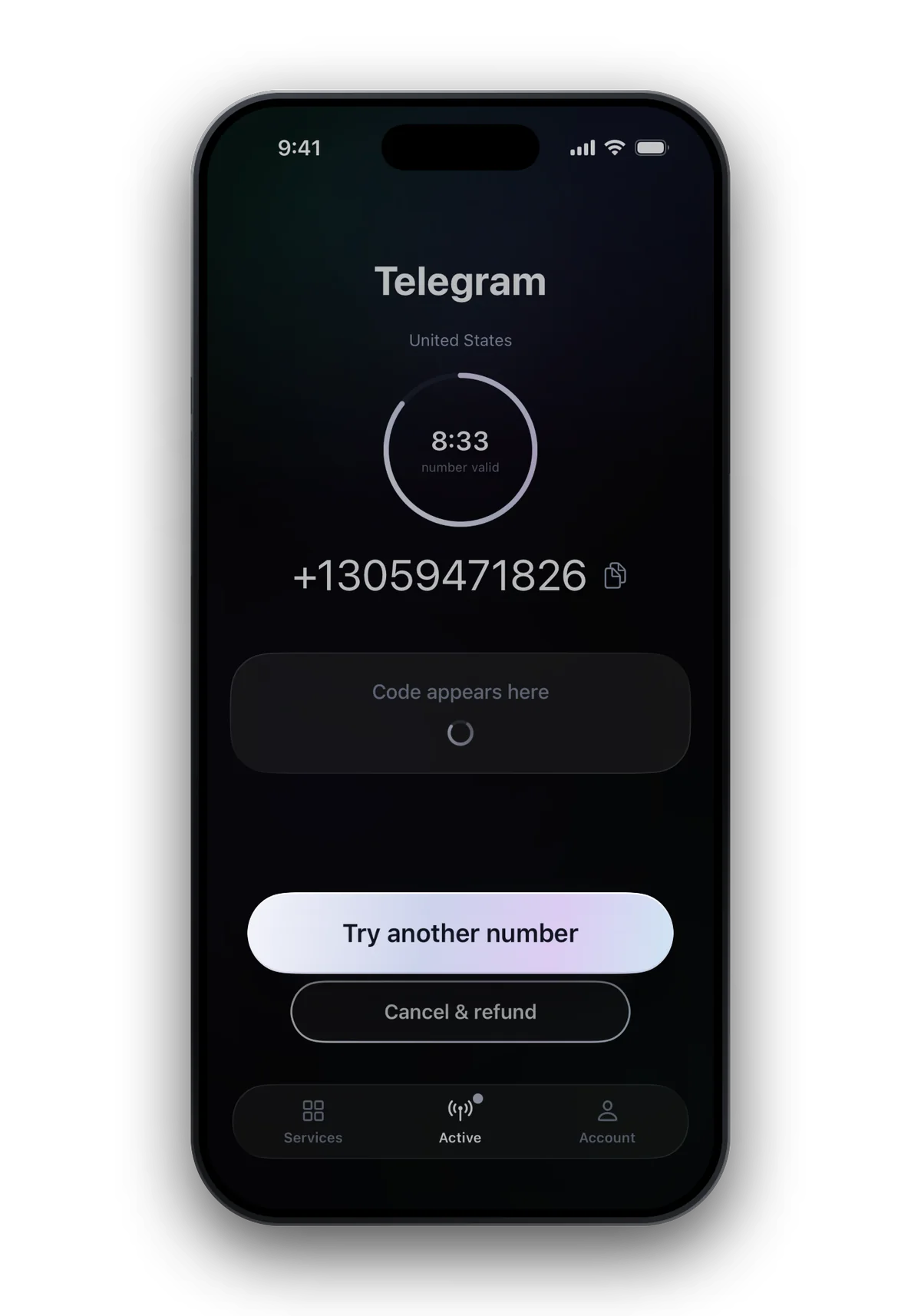
- No code after about two minutes Take another number in the same country first. It costs nothing extra.
- The second number fails the same way Now it is the range, not the number. Pick another country.
- The service says "invalid" or "not supported" That is a refusal of the range before any SMS. Switch country straight away, see why apps reject a number.
- Nothing works Cancel. With no code, your money comes back.
Common questions
What is the best country for a verification number?
It depends on the service. Pick the country with the highest success rate the app shows for that service today; the answer for WhatsApp is often different from the one for Telegram.
Why does the success rate never show 100 %?
We cap the displayed rate at 95 %. Services can refuse a range at any time, and no number is certain to receive a code.
Is a more expensive country more likely to work?
Not by itself. Prices follow availability. The success rate is the better signal.
Should the number's country match where I live?
Not necessarily. Most services accept numbers from many countries. Some apps built for one market expect a local number, and then that country is the one to choose.