


A made-up phone number cannot verify anything: the code is sent to that number, and if nobody holds it, nobody reads it. When people search for a fake number for verification, they almost always mean a real number that is not their own, so their personal number stays out of an app. That is a legitimate privacy choice. Using it to deceive people or dodge a ban is not.
Why a made-up number never works
| What happens | |
|---|---|
| The number does not exist | The form says invalid, or the text goes nowhere |
| The number exists and belongs to someone | A stranger gets your code and can use it |
| A reserved example number | Recognised and refused by most forms |
| A number generator website | Produces valid-looking digits that nobody can read for you |
Verification only proves one thing: that someone could read a message sent to that number a moment ago. Without access to the inbox, there is nothing to type in.
Real, but not yours: what people mean by fake
When people say fake, they usually mean a real number that is simply not theirs: a free public number, a second-line app, or a private temporary number. All three can receive texts. What differs is who else reads them and whether apps accept them.
Only the private kind keeps the code to you and is made for one sign-up. The three are compared on free SMS numbers and in burner numbers explained.
Good reasons to keep your own number private
- A shopping or coupon app wants a number, and you do not want its marketing texts.
- You are trying out an app and may delete the account next week.
- You sell things online and do not want buyers to have your personal number.
- You want a separate profile, such as for a hobby, kept apart from your private chats.
- Your number has leaked before and you want fewer places to hold it.
What is not okay, and against our terms
These limits are in the terms of service. A number that is not yours is a privacy tool, not a disguise.
Getting a code without your own number
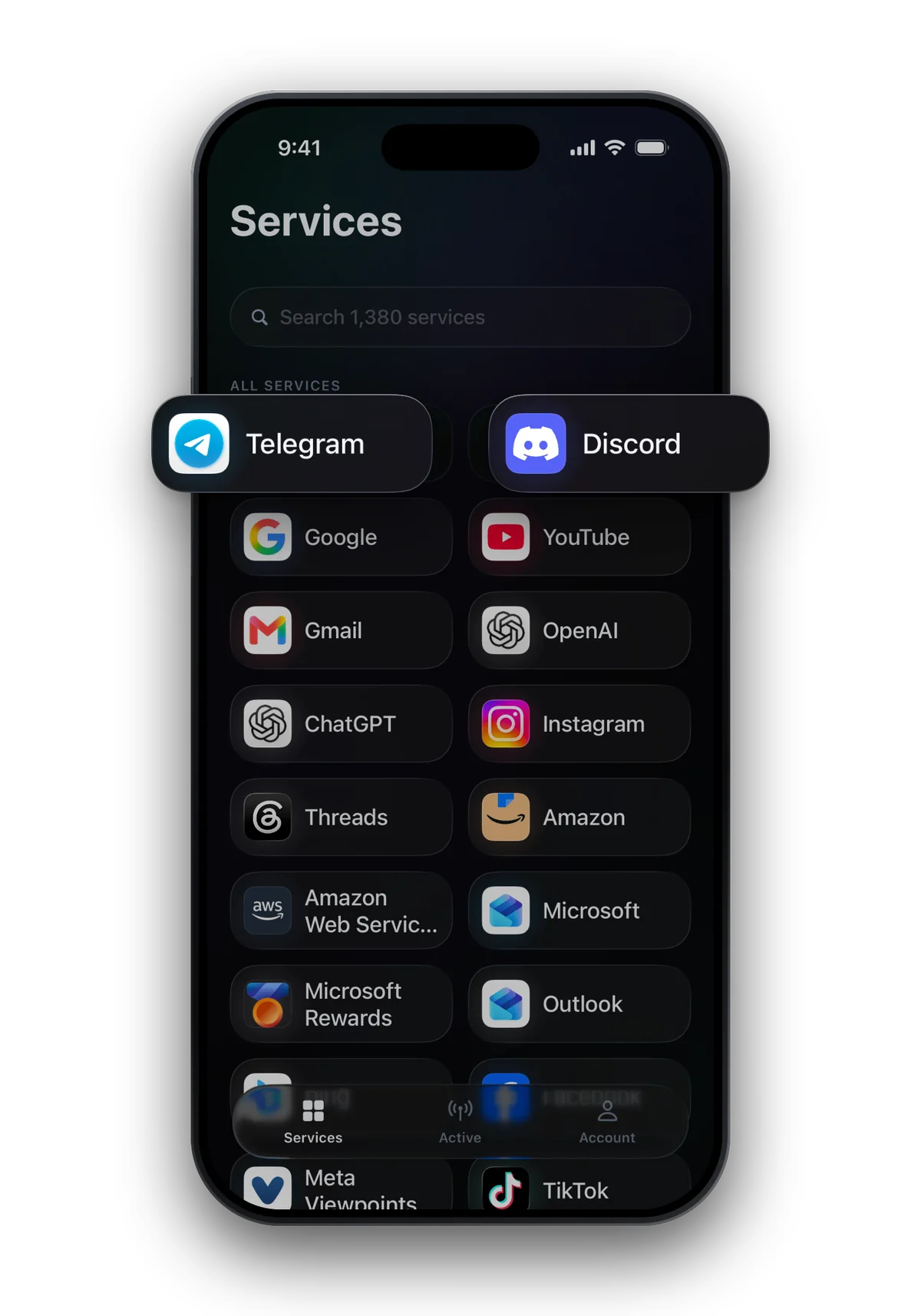
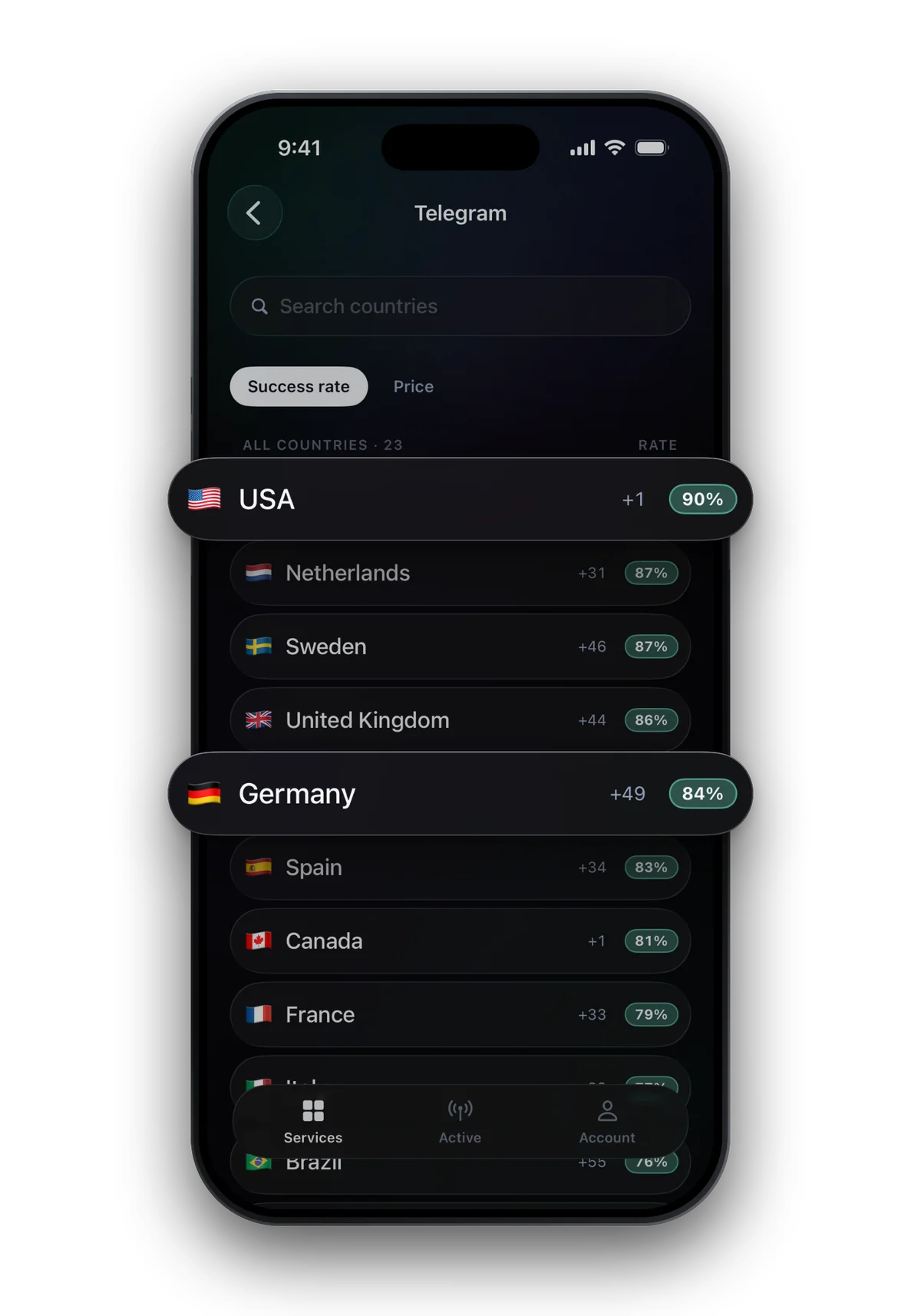
- Pick the app and a country Countries with numbers for that app are listed with success rates. No account needed.
- Pay, then copy the number It is reserved for you for up to ten minutes.
- Type the code from the app No text after about two minutes? Take another number free. No code at all? The money comes back.
- Add a lasting way back in Give the account an email address or authenticator app, since the number will be gone.
Common questions
Can I use a random number to verify an account?
No. The code goes to that number. If it does not exist, nothing arrives; if it does, a stranger receives your code.
Is using a temporary number the same as a fake number?
No. A temporary number is real and receives the code. It just is not your personal number.
Is it allowed to use a number that is not mine?
For privacy, yes, within the rules of the app you sign up for. For fraud, impersonation or getting around a ban, no.
Why do apps refuse free numbers from websites?
They are shared and have received codes for many accounts. Apps recognise them and stop sending codes.